What does the future hold for the next generation of nomads? We follow traditional herdsmen and their camels on a trek across the vast plains of remote Western Mongolia.
One piece of advice if you're planning a trip to Mongolia: never ask a local, "When will we arrive?" Not only is it bad luck, it's also considered extremely rude. When our guide, Australian adventurer, filmmaker and author Tim Cope, tells us this, I presume it's a romantic reference to nomadic life being all about "the journey". A few car breakdowns later, I discover it's to be taken literally: in this vast, unpredictable country, it's pointless trying to predict how long it'll take you to get anywhere.
We're in Khovd – three hours by plane from the capital, Ulan Bator – and have driven to the end of the road. Cars no longer being an option, the nine of us – a mixed group from around the world who've joined the World Expeditions "Nomads and Naadam with Tim Cope" trek – will spend the next couple of weeks following herdsmen and their animals through remote Western Mongolia.
We're also told we'll no longer need our watches (or smartphones – there's no network). Cope and his right-hand man, Tsenkhee, an urban Mongolian who communicates with his boss in fluent Russian, will see to it that we get plenty to eat and enough sleep. Rushing is sacrilege here, and it will not be until I return to Hong Kong that I'll realise how tightly measured my time usually is; divided into tiny allotted portions from breakfast to bedtime.
While just under a third of Mongolians are nomadic or semi-nomadic, the four herders travelling with us are different in that they're living much the same life as they would have thousands of years ago. They still travel by camel and use no generators or water pumps. They're not tour guides, as such; they've been hired specifically to accompany us and apply their skills to our needs.
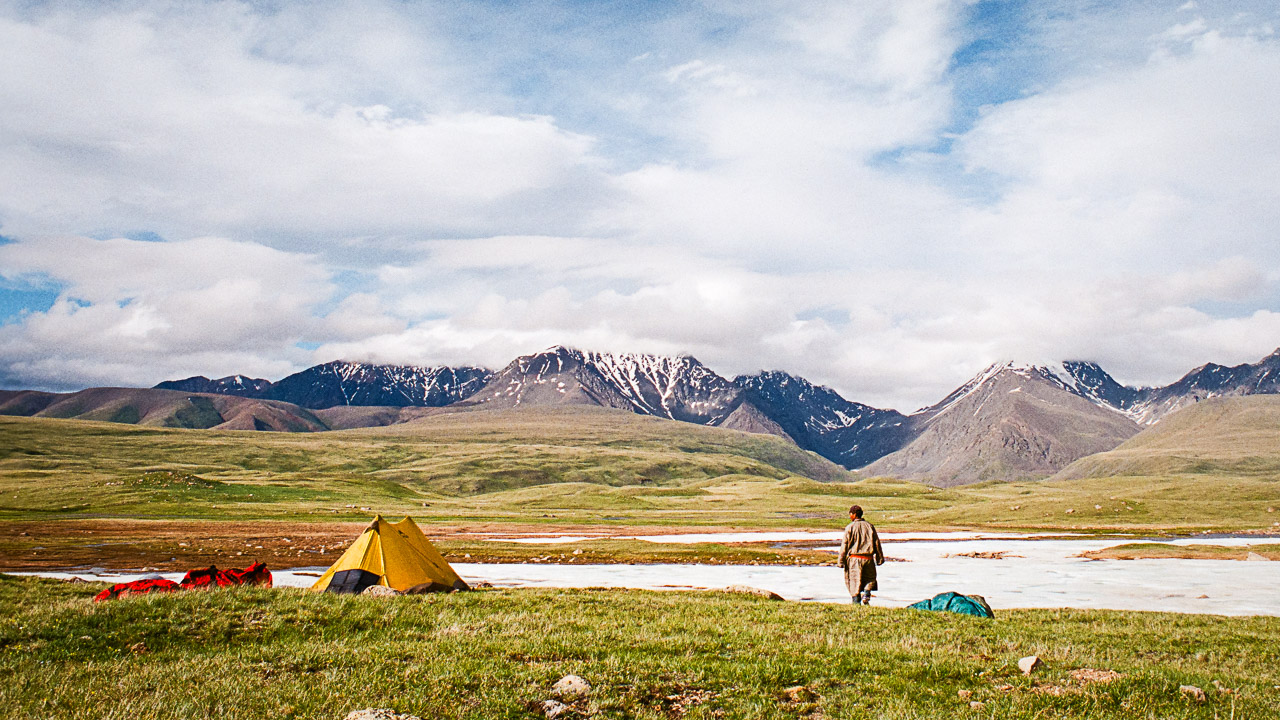
It takes time for eyes that are unfamiliar with the sprawling sandy plains and endless blue sky to adjust to the scale of the environment. There is no private land ownership here, no farms, fields or fences. There's no tourism infrastructure where we're heading, either: no stores, no fridges, just what we (and our camels) can carry.
The herders laugh when I tell them they live like kings compared with us. But you do the maths: Mongolia's 1.5 million square kilometres are shared by just 3 million people, making it the most sparsely populated country in the world. Hong Kong, at just 1,104 sq km, is home to 7.24 million.
We walk from breakfast through to dinner, the camel train following with our tents and duffel bags. One beast groans loudly each time its load is packed and unpacked, protesting like a grumpy old man, his mouth full of food. These creatures are surprisingly agile and strong, however, and when nomadic communities migrate from one pasture to another, a single animal will carry up to 300kg: all a family's worldly belongings and their ger, their round tent-like homes commonly referred to by the Turkic word yurt.
Cope has a secondary career as a postman; on each tour he leads, he brings photographs from previous trips and delivers them to people on the steppe, often a year after the pictures were taken. Families gather around him in delight, sifting through his photos, and pose for us as we take snaps that will be delivered next time.
By the time we reach our first camp – the herdsmen having raced ahead on the camels to set up the tents – our legs are buckling.
We're invited into a ger that has been set up for the season nearby, and offered salted yaks' milk tea, curd and boortsog (fried dough sticks). The tent's residents are the first of many Khovd families we'll pay informal visits to. At each ger, we'll be given a traditional nomad welcome: copious amounts of food, tea and home-brewed vodka.
Twelve years ago, such hospitality provided Cope with a lifeline during a three-and-a-half-year horseback ride from Mongolia to Hungary, a journey he later recounted in a film series and book, titled On the Trail of Genghis Khan.
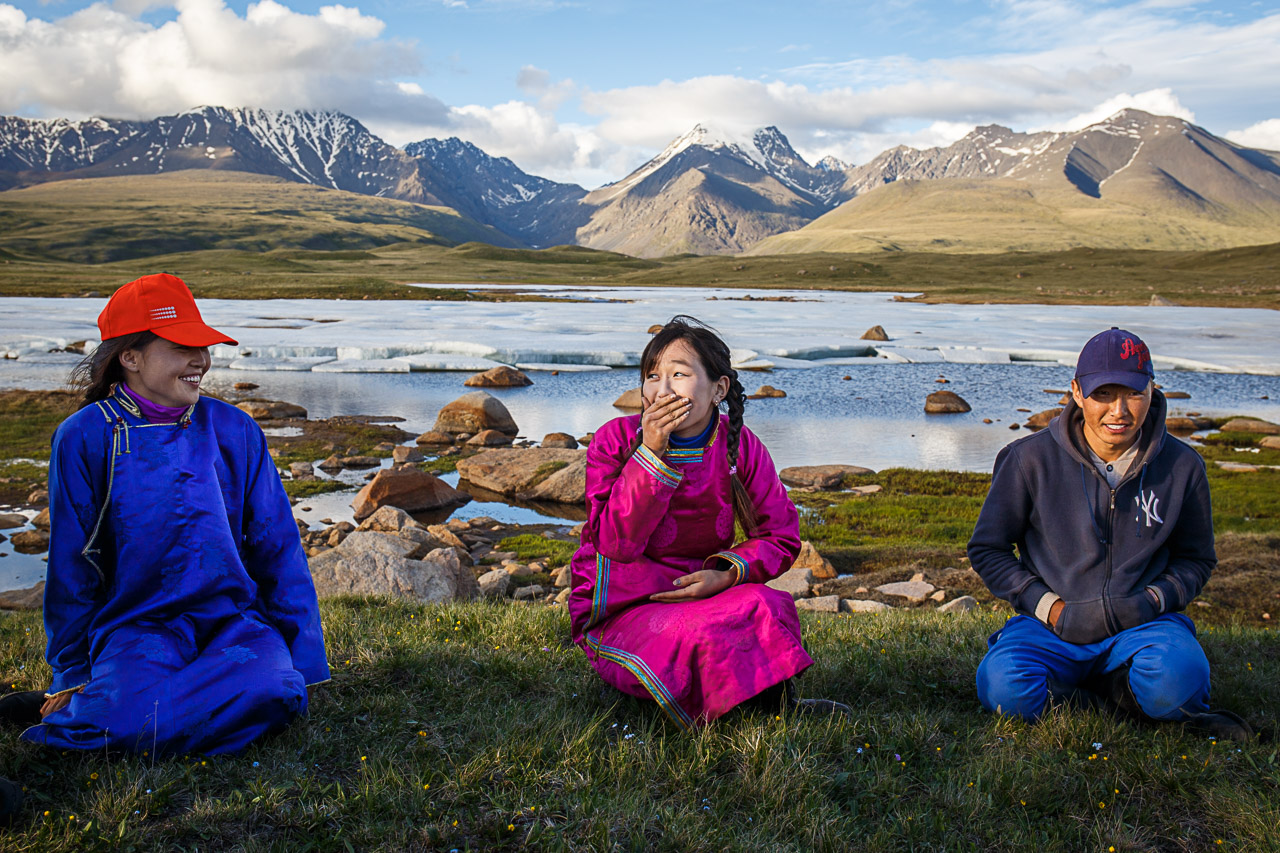
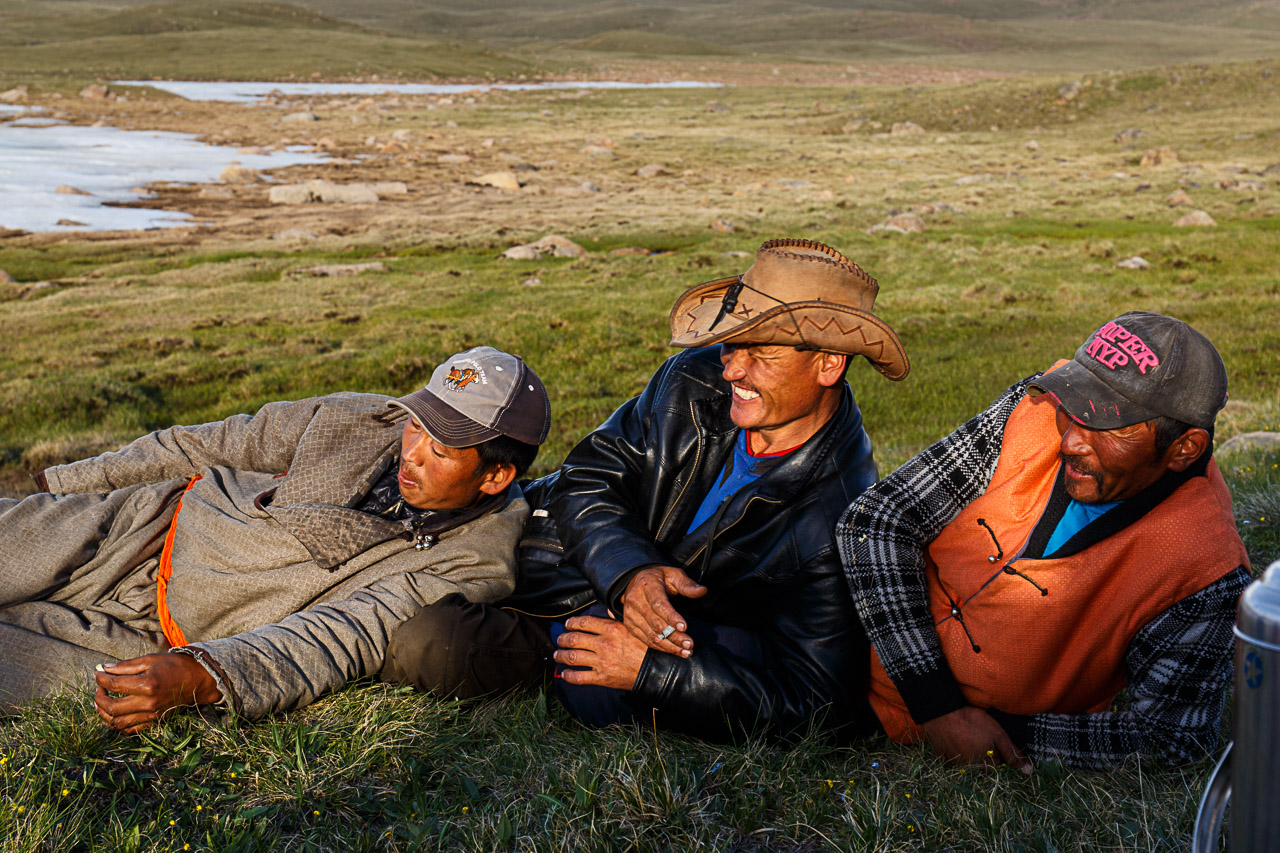
One night, sitting in front of the icy Shivreen River, we introduce ourselves properly to the herdsmen and our two young Mongolian cooks, Otga and Nana. They listen intently while we ramble on about our jobs, families and pets, Tsenkhee translating. I ask them what they like most about being a nomad. "All," says one. "The animals," says another. What do they like least? "Nothing."
Over the days that follow, we trace the migratory path of nomadic families as they move to their summer camps, seeking out higher pastures to escape the heat and mosquitoes.
"They move according to the needs of their animals," says Cope. "Horses, goats, camels and yaks are all naturally nomadic, so instead of putting them into paddocks with fences and stables, they move with them the way the animals would naturally move in the wild."
Each day we trek for anywhere between six and 10 hours, up and down steep slopes, over sand dunes, through deep snow, alpine forests, wet marshlands and numbingly cold streams. The weather swings from one extreme to the other, and we frantically change from thermals into rain gear and back into summer clothes in an effort to keep up with it. At one point I give up, and find myself walking in sodden shorts, my legs pelted by a hailstorm just minutes after they'd been scorched by the sun.
The higher we ascend, the richer the pastures become. We cross over the high pass between the Turgen and Kharkhiraa peaks, reaching, at about 2,900 metres, a series of shimmering, partially frozen lakes. "It's not that cold!" shouts Max, an intrepid 69-year-old who's celebrating his retirement, as he jumps into one of the lakes in his underpants. Some of us opt to continue the climb to the top of a vertiginous snowy ridge in the Turgen range. The air noticeably thins as we inch higher up a steep, gravelly slope, leaning on our trekking poles and panting like old women. From the top, at some 3,700 metres, the valley looks white and glacial. Few Mongolians venture this far, Cope says, let alone tourists.
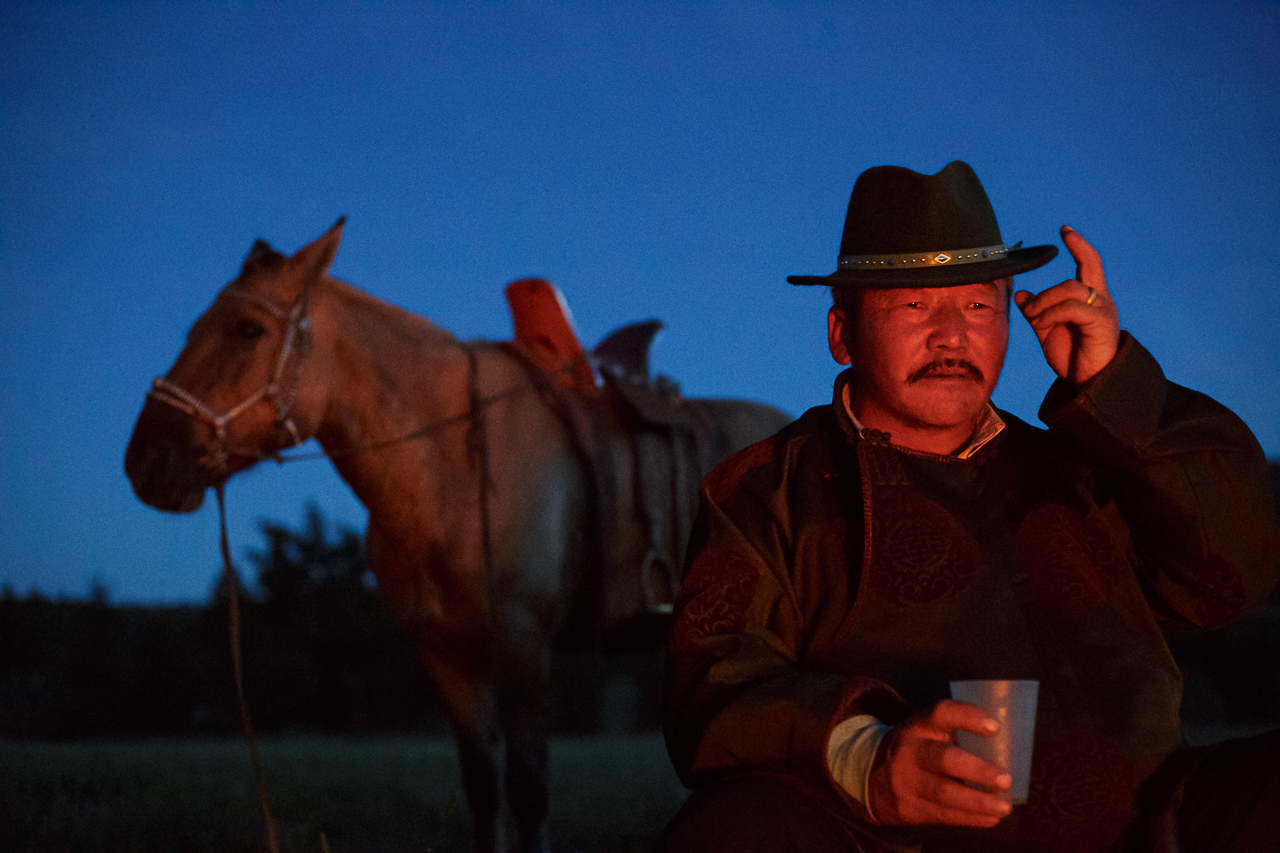
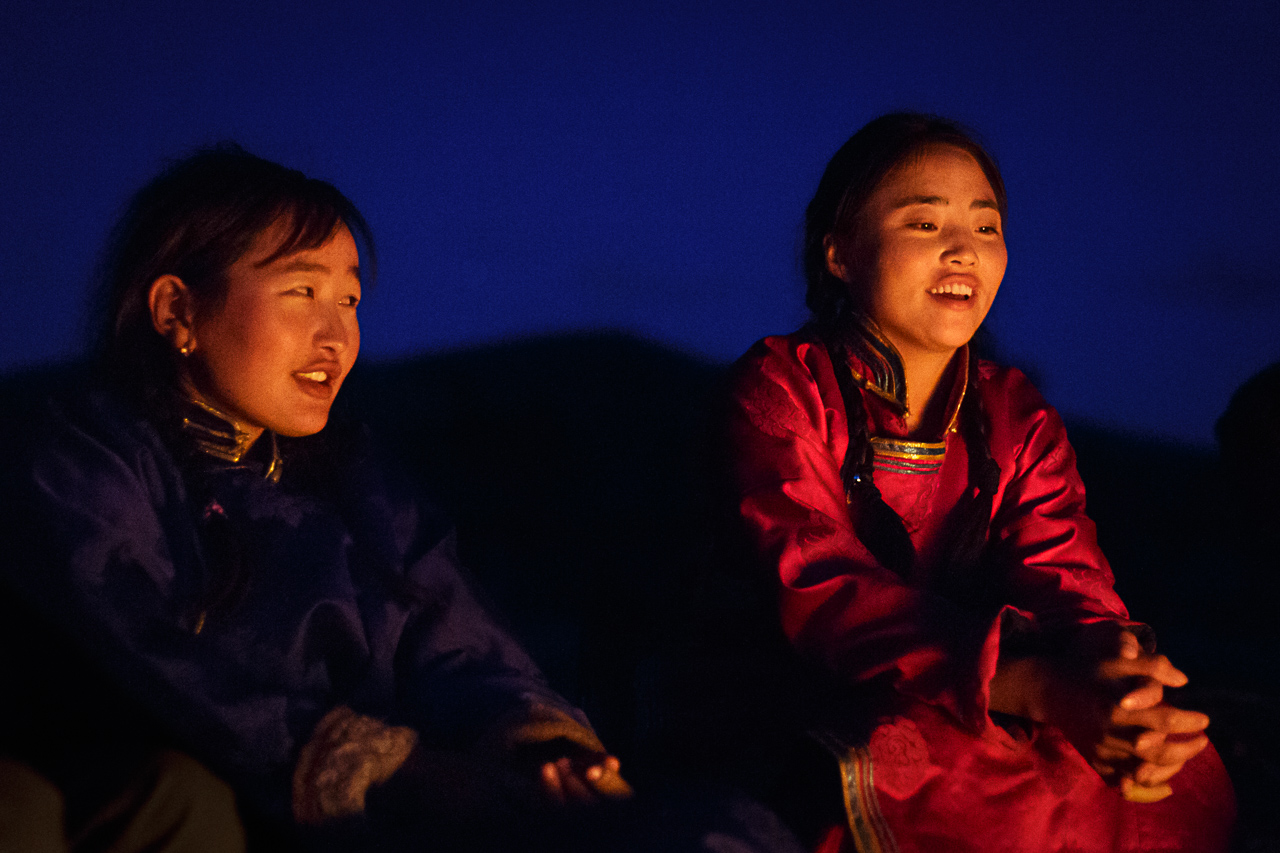
That evening, while I jostle for washing space in a stream shared by yaks, camels and horses, I see a mother and her small children climb down the side of a steep gorge to fill up containers with water – about 30 litres, enough for the family for the following day. What does the future hold for these nomads? They don't fit into a market economy: they're too self-sufficient and constantly on the move. They don't spend money so they don't need salaries; they don't own fixed homes so the government can only tax them on their livestock. Myagaa comes from a long line of nomadic herdsmen but isn't sure what will become of his four children. "I don't know yet whether they will also become herders, it will depend on government policy," he says. "If I send them to university, afterwards they may have no opportunity to work. How do I imagine our future? I don't know at all."
During one of our photo delivery rounds, we meet Davaa, who took Cope in one night 12 years ago, fed him marmot meat and offered him shelter. Will his grandchildren become nomads like him? "Probably not," says Davaa, passing around a mug of vodka while his wife plies us with freshly fried boortsog and heavy clotted cream. "They will follow their own path." The biggest change he's seen in recent years, he says, is in the climate: "There's not as much good grass any more. Life's not as productive. Things are harder." "Nomadic life is like a bellwether for the rest of us," says Cope. "It's these very extreme fragile ecosystems that are the first to show the signs of climate change – they really are the canaries in the coal mine."
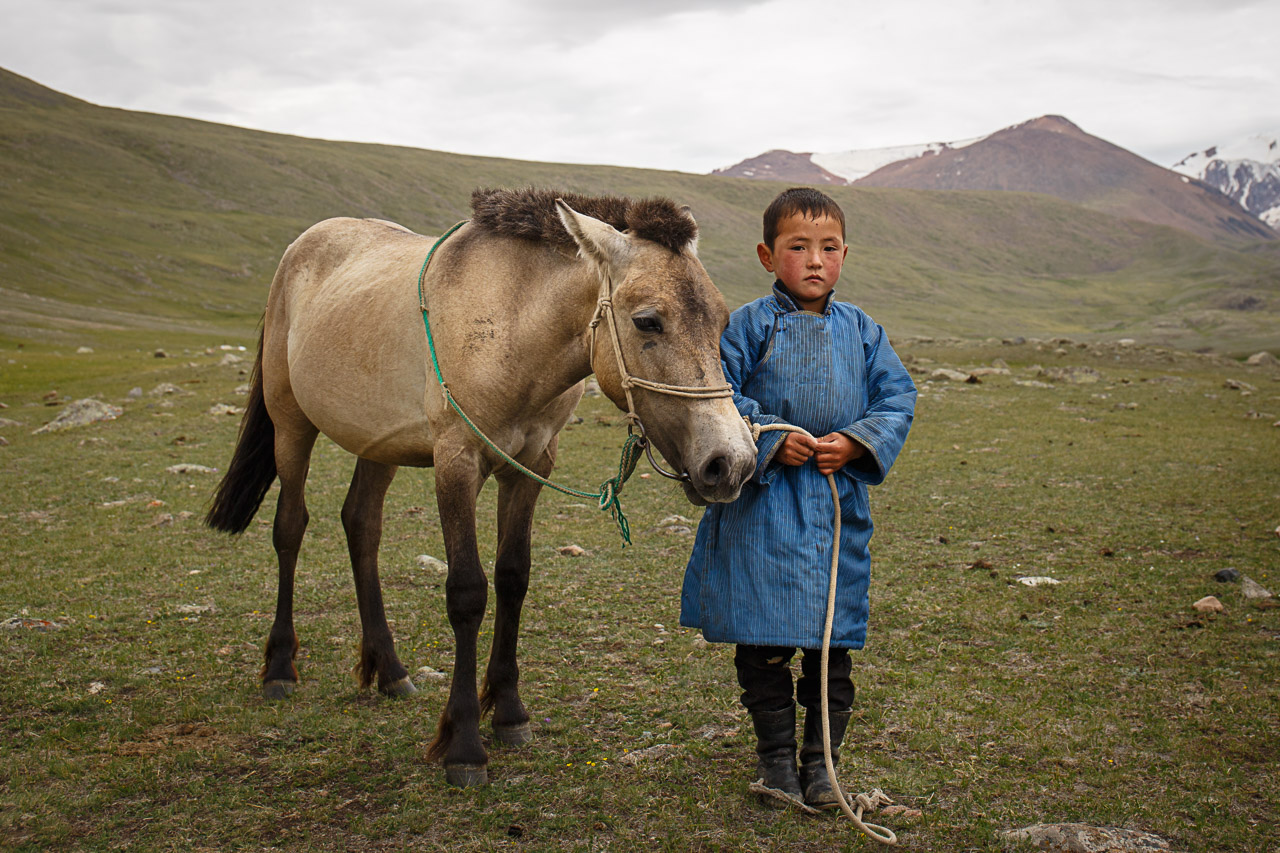
Stepping out of Davaa's ger, I see from a distance what look like miniature horsemen and wonder if I've perhaps had too much vodka. They turn out to be little boys, no older than four or five years old, galloping bareback towards us. Dismounting effortlessly, they walk with the same swagger as Myagaa, eyeing us curiously. They exude freedom and independence.
"Mongolia is at a crossroads," says Cope. "For the first time in thousands of years, the young generation of Mongolians have a choice, to be a herder or to pursue studies in the cities and towns. But over the years I've been coming here, I've seen that nomads really take pride in this life."
As the days progress, our notion of "home" changes. If before it meant mortgages and rooms full of belongings, for now, at least, it's been reduced to the place we walk to each day, where we stop to eat and rest for the night. Our group has begun to feel like a family – animals included. We've become used to camping out in the wild, to sleeping to the sound of animals munching outside our tents, even to the smell of camel sweat, which permeates our camping mats.
On our last night with the herdsmen, before we head back into a world of hot showers, Wi-fi and walls, they sing to us; songs of the land, their animals and their families, in rich baritone voices that fill the valley, leaving us speechless. And then mortified, when they ask us, smiling encouragingly, to return the favour. Our only excuse is that they get a lot more practice than we do: they sing as they ride, they sing as they work.